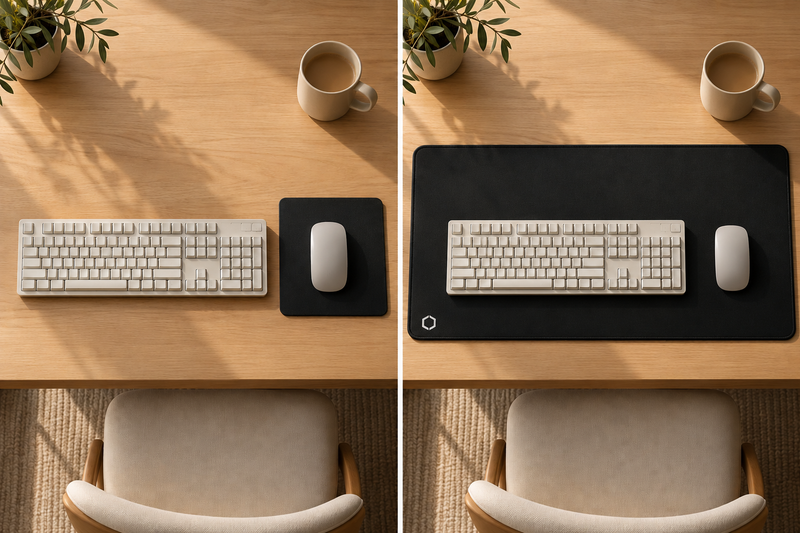
If you're shopping for a desk mat, you'll quickly hit a fork: leather or fabric? Both look good in photos, both protect the desk, and both have loyal fans. But they feel different under the hand and behave differently over time. Here's an honest comparison so you can pick the surface that suits how you actually work, and we'll be upfront about where we land.
The quick verdict
- Leather suits a formal, executive look and a full-desk "blotter" style. It wipes clean and ages with character, but it can be slick under a mouse and usually costs more.
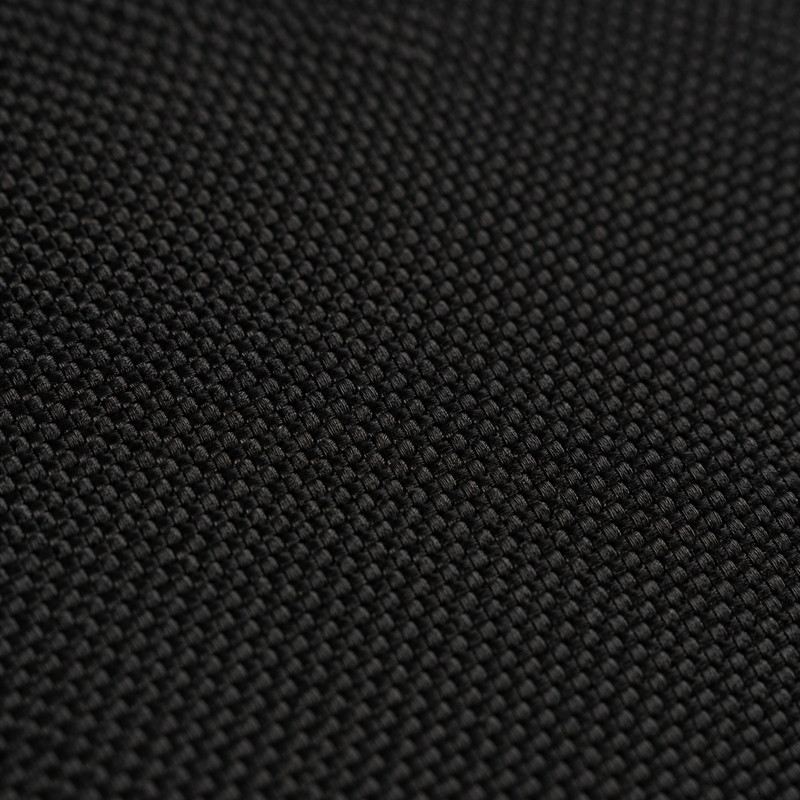
- Fabric (fine weave) suits a soft, matte, everyday working surface with better mouse tracking. It feels warmer under the hand and tends to cost less for the same size.
Neither is universally "better." It comes down to feel, use, and taste.
Feel under the hand
This is the biggest everyday difference. Fabric, specifically a fine weave, is soft and matte. Your wrists rest on it comfortably, and it doesn't feel cold or hard. Leather is firmer and smoother; some people love that crisp, formal feel, others find it a little slick for long sessions. If you spend all day at your desk, the surface you'd rather touch matters more than any spec.
Mouse tracking
For anyone who uses a mouse a lot, work or play, fabric usually tracks better. The fine weave gives an optical or laser sensor consistent texture to read, so movement feels precise and predictable. Leather can be smoother and less consistent for a sensor, and a glossy finish can occasionally cause the mouse to skip. If precise tracking matters, fabric has the edge.
Durability and how they age
Both last well if they're made well, but they age differently:
- Leather develops a patina, small marks and softening that some people find attractive and others don't. It can scratch, and it doesn't love water. Real leather also needs the occasional conditioning.
- Fabric with stitched edges and a fade-resistant print holds a clean, consistent look. It wipes clean with a damp cloth and doesn't need conditioning. The thing to check is the edge: stitched edges last; heat-cut or glued edges fray.
The deciding factor for both is construction quality, what makes a desk mat premium applies whichever material you choose.
Cleaning and care
- Fabric: wipe with a damp cloth, air dry flat. Simple. (More in our guide on keeping a desk mat flat and clean.)
- Leather: wipe with a dry or barely-damp cloth, keep it away from water, and condition occasionally. A little more upkeep for that formal look.
Price
For the same size, fabric is usually more affordable than genuine leather, and far more affordable than premium full-grain leather. "Leather-look" (PU) mats are cheaper than real leather but can peel or crack over time, worth knowing if a low price looks too good.
Which should you choose?
- Choose leather if you want a formal, executive, full-desk blotter look, don't use a mouse much, and don't mind a little upkeep and a higher price.
- Choose fabric (fine weave) if you want a soft, matte everyday surface, precise mouse tracking, easy care, and better value, the calmer, more versatile choice for most desks.
Where we stand (honestly)
We make fabric, not leather, and that's a deliberate choice. For a calm, everyday working desk, a premium fine weave gives the feel, the mouse tracking, and the easy care we wanted, without the slickness or upkeep of leather. The Difavo Desk Mat pairs that fine weave top with precision-stitched edges and a natural rubber base, in a matte black finish, shipped rolled so it arrives flat.
If a formal leather blotter is genuinely what your desk calls for, a leather pad is the right pick, no hard feelings. But if you want a soft, precise, low-maintenance surface for daily work, fabric is worth a close look. You can see ours in the deskmats collection.
Frequently asked questions
Is a leather or fabric desk mat better?
Neither is better overall. Leather suits a formal, executive look and wipes clean but can be slick and pricier. Fabric fine weave feels softer, tracks a mouse better, and is easier to care for and more affordable. Choose by feel and use, not by name.
Do leather desk mats track a mouse well?
Not always. A smooth or glossy leather surface can give a mouse sensor less consistent texture to read, which may cause occasional skipping. A fine weave fabric surface generally gives more precise, predictable tracking.
Are fabric desk mats durable?
Yes, when well made. Look for stitched edges (they don't fray like heat-cut edges), a fade-resistant print, and a natural rubber base. A quality fabric mat wipes clean, holds its shape, and lasts for years of daily use.
Is leather or fabric easier to clean?
Fabric is simpler, a damp cloth and air drying flat. Leather needs a dry or barely-damp wipe, must be kept away from water, and benefits from occasional conditioning.