A premium desk mat is defined by five things you can check before buying: a fine weave fabric surface, stitched edges, a full natural rubber base, an edge-to-edge fade-resistant print, and original design. Those details decide whether a mat stays flat, grips the desk and keeps its look over daily use, or curls, frays and slides.
Two mats can look almost identical in a photo and feel like different objects the moment your hand touches them. Here is what actually matters, what is only marketing, and how to tell them apart quickly.
Premium vs. budget desk mat at a glance
| Part | Premium desk mat | Budget desk mat | What to look for |
|---|---|---|---|
| Surface | Fine weave fabric, soft and matte | Thin coated polyester, can glare | The surface material named precisely |
| Edges | Stitched on all four sides | Heat-cut or glued | The word "stitched" and a close-up of a corner |
| Base | Full natural rubber | Thin foam or light backing | "Natural rubber base", full coverage |
| Edge-to-edge, fade-resistant, odour-free | Can fade or arrive with a strong smell | Shipped rolled, not folded | |
| Design | Original, made in-house | Licensed or copied graphics | A brand that designs its own work |
1. The surface: fine weave fabric vs. thin coated polyester
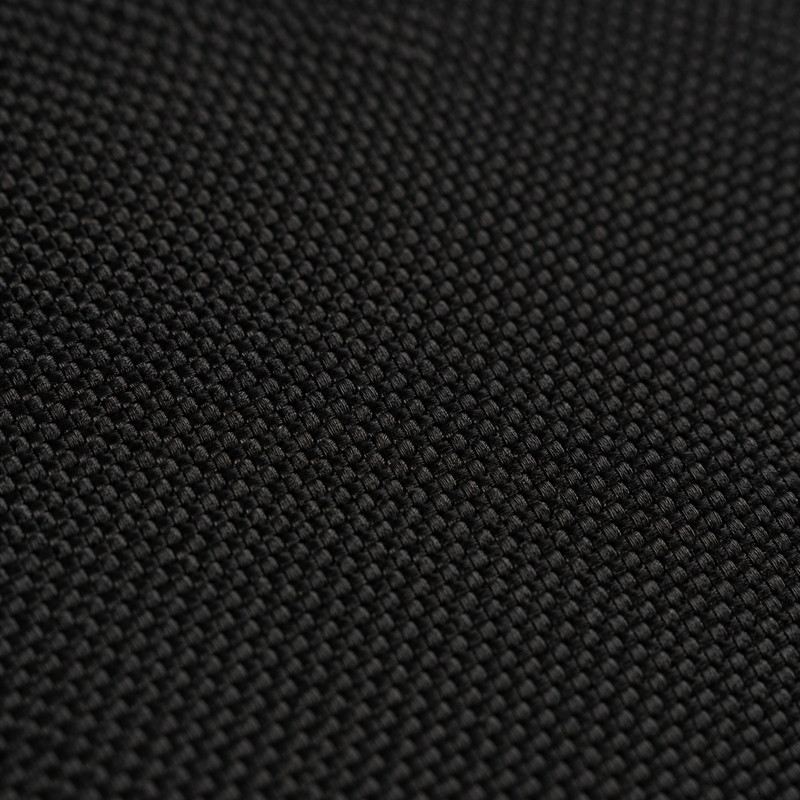
The top is what you touch all day, so start there. A premium desk mat uses a fine weave fabric, a tight, even surface that feels soft and matte under the hand and gives a mouse fast, precise tracking. It doesn't glare under a lamp, and it doesn't have that slick plastic sheen.
Cheaper mats often use a thin coated polyester. It photographs fine, but it can feel slippery, show a shine, and wear unevenly where your wrist and mouse sit most. Over a few months, that's the spot that looks tired first.
What to check: does the description name the surface material specifically? "Fine weave fabric" is a real answer. "High quality top" is not.
2. The edges: stitched vs. heat-cut or glued
Edges are the quiet giveaway. A premium desk mat has precision-stitched edges on all four sides, a clean, sewn border that keeps the mat a crisp rectangle for years and stops the surface from fraying or peeling away from the base.
Budget mats are usually heat-cut or glued at the edge. It works at first, then the corners start to lift, the print separates, and the whole thing looks worn. Once an edge frays, there's no fixing it.
What to check: look for the word "stitched." Then look at a macro photo of the corner, a good brand will happily show it, because the stitch is the proof.
3. The base: natural rubber vs. foam or light backing
A desk mat only does its job if it stays where you put it. A full natural rubber base grips the desk through typing, writing, and fast mouse movement, no sliding, no bunching, and no marks left on the desk.
Lighter mats use thin foam or a minimal backing that shifts as you work. You end up nudging it straight ten times a day without noticing why.
What to check: "natural rubber base," ideally full-coverage (not just a few strips). It's heavier, it grips better, and it lasts.
4. The print: edge-to-edge, true-to-colour, odour-free
Even on a plain black mat, print quality shows. A premium finish is edge-to-edge, stays true to colour, and resists fading, so the mat looks the same next year as it did on day one. Good production is also odour-free, any faint packaging scent fades within a day of unrolling.
Cheaper printing can look dull or slightly off-register, fade with sunlight, and arrive with a lingering rubber smell that outstays its welcome.
What to check: "fade-resistant," "true-to-colour," "odour-free." And a brand that ships the mat rolled rather than folded, folding creases the print; rolling protects it.
5. The design: original vs. licensed or copied
This one is about taste, not just durability. A premium desk mat is designed in-house, original work, not a licensed character or a graphic copied from a marketplace listing. Minimal, considered design ages well; loud graphics and RGB themes date fast and rarely suit a grown-up desk.
What to check: does the brand design its own work? Original design is a signal that the rest of the product got the same care.
So, is a premium desk mat worth it?
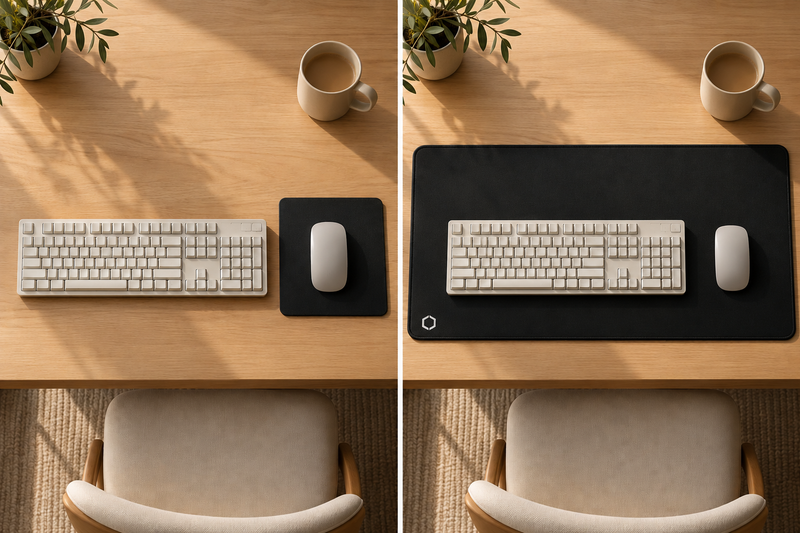
If you use your desk every day, yes, the difference is one you feel constantly and replace rarely. A cheap mat is cheaper once; a good one is bought once. The premium version costs a little more up front and saves you the fray, the curl, the slide, and the second purchase.
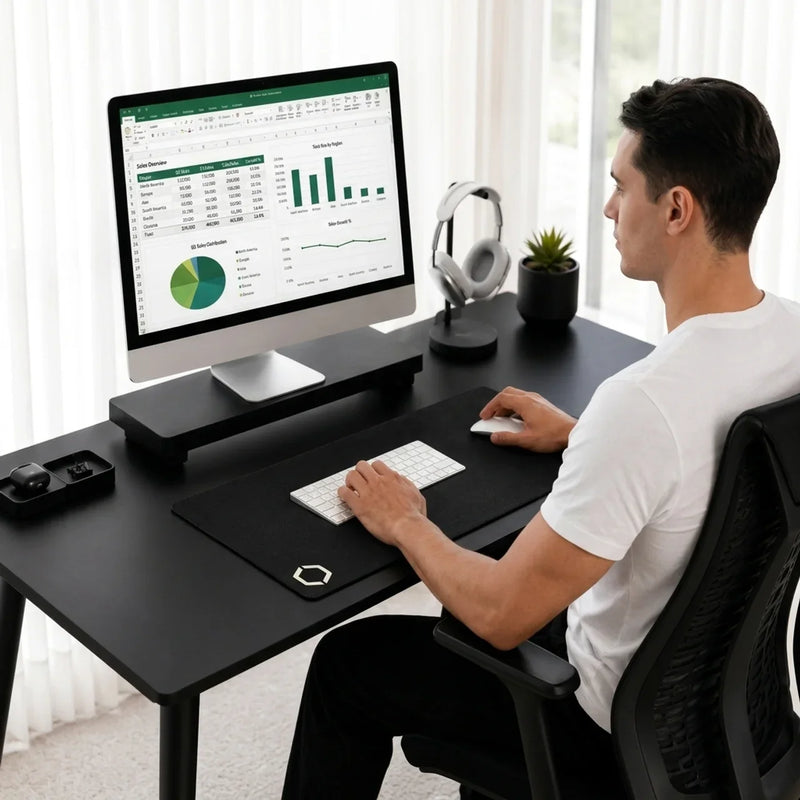
That's exactly what we set out to make. The Difavo Desk Mat is one considered surface: a premium fine weave top, precision-stitched edges on all four sides, a full natural rubber base, and an edge-to-edge, odour-free finish, shipped rolled so it arrives flat. One thing, done well.
You can browse the deskmats collection to see it, or read more on what a desk mat is and what it does, the difference between a desk mat and a desk pad, and what size desk mat fits your desk.
Frequently asked questions
What makes a desk mat "premium"?
Premium comes down to materials and finish: a fine weave fabric top, precision-stitched edges, a full natural rubber base, and an edge-to-edge, fade-resistant print, not loud branding. It's the parts you feel every day and the ones that decide how long it lasts.
Is a more expensive desk mat actually better?
Usually, if the price reflects real materials. Stitched edges, natural rubber, and fine weave fabric cost more to make and last far longer than heat-cut edges and foam backing. Check what the price buys before assuming it's worth it.
How long should a good desk mat last?
A well-made one, stitched edges, fade-resistant print, natural rubber base, should look and feel new for years of daily use. Cheaper mats often show wear, fraying, or curling within a few months.
What should I avoid in a cheap desk mat?
Heat-cut or glued edges that fray, thin foam backing that slides, coated polyester that glares and wears, and printing that fades or arrives with a strong rubber smell. Folded (not rolled) shipping is another red flag, it creases the surface.